
THCa Flower vs Delta 8 Flower
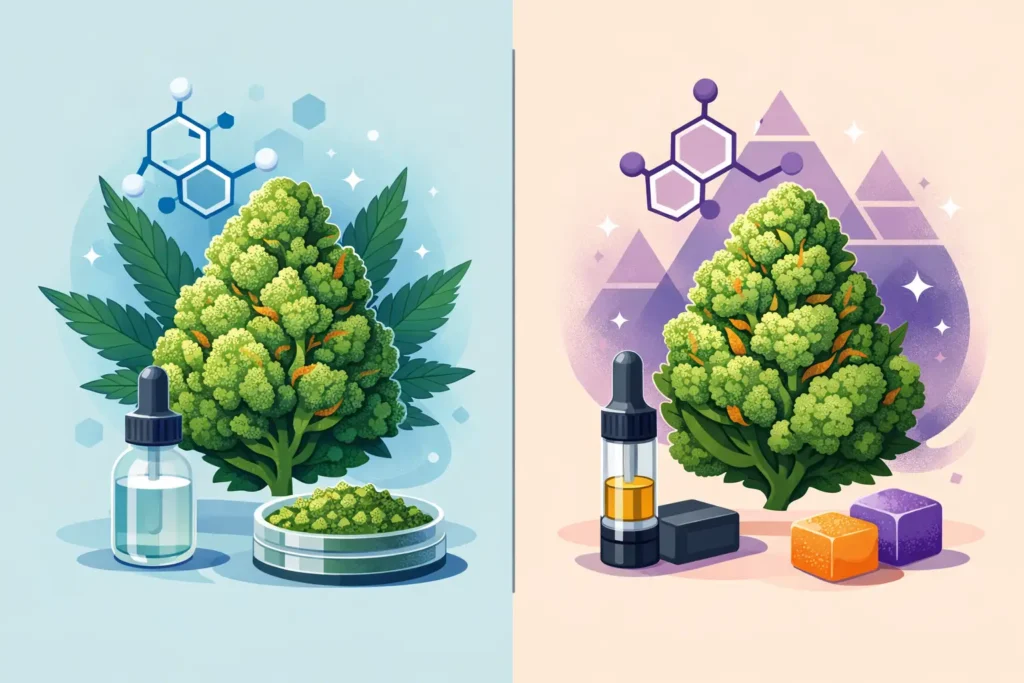
One jar gets picked up because the nose is loud, the bag appeal is there, and shoppers already know the strain. Another gets attention because the price hits easier and the effect profile feels more approachable to a different customer. That is the real THCa flower vs delta 8 flower conversation for wholesale buyers – not hype, but what sells, who buys it, and how it fits your shelf strategy.
If you are buying in bulk, you are not just comparing cannabinoids. You are comparing turn rate, margin, customer education burden, legal comfort level, and how each product performs in your market. THCa flower and delta 8 flower can both earn space in a retail mix, but they are not interchangeable. Smart operators know the difference matters at the jar, menu, and reorder level.
THCa flower vs delta 8 flower at a glance
THCa flower is hemp flower that tests high in THCa, the acidic precursor to delta 9 THC. Before heat is applied, THCa is non-intoxicating in its raw state. Once smoked, vaped, or otherwise heated, it converts and delivers effects that many consumers associate with traditional THC flower.
Delta 8 flower usually starts as hemp flower and is then infused or coated with delta 8 THC distillate. That means the cannabinoid content is typically added after harvest rather than expressed naturally by the flower in the same way shoppers expect from premium THCa strains. The end result can still move, especially in price-sensitive categories, but the product story is different.
That difference shapes customer perception fast. THCa flower tends to win on authenticity, aroma, strain identity, and premium positioning. Delta 8 flower usually competes harder on accessibility, lower-intensity appeal for some users, and sometimes a more entry-level price point.
Why THCa flower usually carries stronger shelf appeal
For experienced buyers and experienced end customers, THCa flower often feels closer to what people already understand as quality flower. The visual structure matters. The terpene expression matters. The smoke matters. When a customer opens a jar and gets hit with a real strain nose instead of something that feels processed or sprayed, that can close the sale right there.
That is a major reason THCa flower tends to command more attention in smoke shops, dispensary-adjacent stores, and online menus built around premium product tiers. It lets retailers merchandise by strain, by indoor or greenhouse quality, by top shelf or budget smalls, and by expected effect profile. That creates cleaner segmentation and stronger upsell opportunities.
Delta 8 flower can still have a place, but the sales pitch often requires more explanation. Some customers like it because it feels more approachable. Some buy it because they already know delta 8 from carts or gummies and want a flower option. But others are skeptical of infused flower formats and ask more questions about how it is made. More questions at the counter can mean slower conversions.
Effects are not the same, and your customers know it
The THCa flower vs delta 8 flower debate gets real when shoppers ask the simplest question on the floor – which one hits harder?
In most cases, THCa flower is going to be perceived as the more potent and more traditional flower experience once heated. That is why it tends to attract customers looking for strong effects, full terpene expression, and a closer match to high-demand cannabis flower expectations.
Delta 8 flower is usually marketed as a milder alternative. For some consumers, that is a plus. They may want something less intense or something they see as more functional. But effect response is not universal, and infused flower can produce a less natural-feeling experience depending on the material and the application method.
From a wholesale standpoint, this matters because product fit is customer-fit. If your store wins with heavy smokers, connoisseur buyers, or customers chasing loud indoor flower, THCa will usually have the stronger pull. If your customer base leans experimental, price-aware, or already buys a lot of delta 8 in other formats, delta 8 flower may still deserve a lane.
Compliance and risk are part of the buying decision
Anybody buying bulk in this category already knows the legal landscape is not something you play around with. It shifts. It varies. It gets enforced differently depending on where you operate and how products are handled.
THCa flower can be a strong seller, but it also brings a need for tighter awareness around testing, documentation, shipping procedures, and state-level interpretation. Delta 8 flower comes with its own complications, especially because some states have taken a harder stance on delta 8 products specifically. So this is not a simple safe-versus-risky split. It depends on your market, your operational tolerance, and how dialed in your supply chain is.
For retailers, the real move is working with suppliers who understand documentation, batch consistency, insured shipping, and the compliance expectations that come with moving serious volume. Cheap product with shaky paperwork is not a deal. It is a future headache.
Margin is not just about cost per pound
A lot of buyers make the mistake of comparing THCa flower and delta 8 flower only by acquisition cost. That is incomplete math.
THCa flower may cost more upfront, especially in indoor or top-shelf tiers, but it can support stronger retail pricing and move faster with the right audience. Better photos, cleaner strain storytelling, and stronger repeat demand can all improve your margin outcome even if your landed cost is higher.
Delta 8 flower may offer an easier opening price, but if the product sits longer, needs more education, or gets treated like a secondary option by shoppers, your actual return can flatten out. Lower cost only wins if the product keeps moving.
That is why category planning matters. Some stores do well carrying both, but not in equal depth. THCa becomes the hero category, while delta 8 flower fills a narrower value or alternative-use lane. Other shops skip delta 8 flower entirely and double down on premium THCa because that is what their customers reorder.
Which one moves faster in retail?
In many markets, THCa flower has the stronger momentum right now because consumer demand has shifted toward products that feel closer to traditional flower. Buyers want quality visuals, recognizable strains, and an experience that does not feel synthetic or overly processed.
That does not mean delta 8 flower is dead weight. It means you need the right expectations. It can move in stores where shoppers are familiar with delta 8, where lower-intensity positioning matters, or where entry price drives trial. But it usually does not create the same premium energy around the display.
If your business thrives on high-turn flower jars, hype strains, and repeat customers asking what is new this week, THCa flower tends to fit that engine better. If your assortment is broader and built to catch every kind of cannabinoid shopper, delta 8 flower can still play a support role.
How to stock THCa flower vs delta 8 flower the smart way
The move is not to ask which category is universally better. The move is to ask which category earns more space in your store.
If your customers chase potency, terps, indoor quality, and strain-specific buying, lead with THCa flower. Go wider in assortment and give people clear good-better-best options. Budget smalls, greenhouse, indoor, exotic, and top shelf all give you room to capture different spend levels without losing the flower-first customer.
If you already have demand for delta 8 carts, edibles, or disposables, then delta 8 flower may be worth testing as an add-on category rather than a core one. Keep the SKU count tight, watch sell-through honestly, and do not let sentimental inventory decisions eat shelf space.
For bigger accounts, this is where a supplier relationship really matters. You want flexibility on volume, consistency across reorder cycles, and enough assortment depth to adjust fast when one category starts pulling harder. Bay Smokes Wholesale gets that because wholesale is the whole lane – scale, variety, and pricing that makes sense when you are buying to sell, not buying to sample.
The better question is what your market rewards
THCa flower vs delta 8 flower is not a debate you win with theory. You win it with what leaves the shelf, what gets reordered, and what keeps your margin healthy without creating compliance stress or customer confusion.
THCa flower usually has the stronger case if you want premium shelf presence, natural flower appeal, and broader demand from customers who know what they are looking for. Delta 8 flower can still serve a purpose, especially as a value or alternative category, but it is rarely the product that carries the same heat on its own.
If you are buying for resale, stock what makes your menu sharper and your reorder list easier. The category always tells the truth when the numbers come back.