
Is THCa Flower Legal to Resell in the US?
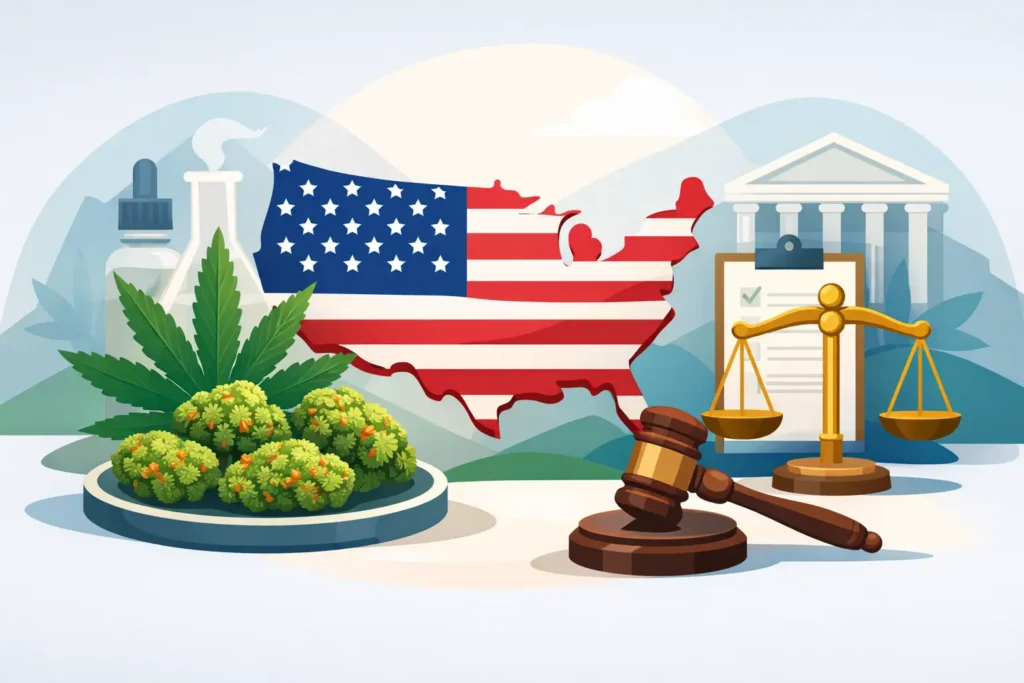
If you are asking is THCa flower legal to resell, you are already thinking like a real operator. The short answer is maybe – and that is exactly why smart buyers do not treat THCa like a simple yes-or-no product category. You can source compliant flower, line up strong margins, and still get hit with problems if your state rules, licensing setup, labeling, or shipping process are off.
For wholesale buyers, the real question is not just whether THCa flower exists in a legal lane. The question is whether your specific resale model is built to survive scrutiny. That means looking at federal hemp rules, your state’s definition of lawful hemp product sales, how local enforcement reads intoxicating hemp, and whether you are set up to document compliance from purchase to delivery.
Is THCa flower legal to resell under federal law?
At the federal level, THCa flower is usually sold under the hemp framework created by the 2018 Farm Bill. That law removed hemp from the federal controlled substances list so long as the product contains no more than 0.3% delta-9 THC on a dry weight basis. That is the legal hook most THCa flower sellers rely on.
Here is where things get tricky. THCa itself is not delta-9 THC before heating, but once flower is smoked or otherwise decarboxylated, THCa converts into THC. That has made THCa flower a pressure point in the hemp market. Some operators treat that federal definition as enough. Others know better and build around the gray areas.
In plain terms, federally compliant paperwork can help support resale, but it does not guarantee you are clear everywhere. Federal legality is only part of the play. States and local agencies still have room to regulate, restrict, or ban products they view as intoxicating hemp.
Why the answer to is THCa flower legal to resell depends on your state
This is where buyers either stay sharp or get burned. A product can appear compliant under federal hemp rules and still be restricted where you do business. Some states allow hemp flower sales with relatively few issues. Some heavily regulate inhalable hemp. Some treat THCa flower as too close to marijuana and move to ban or limit it.
That means your resale risk depends on where you are warehousing, where you are shipping, where your storefront is located, and where your customers are receiving product. If you sell online, your exposure can be even broader because you are not just dealing with one state. You are dealing with every state you choose to serve.
A buyer running a smoke shop in one state may have a workable lane for THCa flower. A wellness retailer in another state may face product restrictions, registration requirements, or local enforcement headaches. The same SKU can be a strong seller in one market and a compliance problem in the next.
This is why experienced operators do not ask only whether THCa is legal. They ask whether inhalable hemp is permitted, whether total THC rules apply, whether age-gating is required, whether registration with a state hemp program is necessary, and whether local municipalities add their own limits.
The biggest legal issue: total THC vs delta-9 THC
A lot of confusion comes down to one technical split. Some jurisdictions focus on delta-9 THC only. Others look at total THC, which includes the potential THC created when THCa converts.
If your state or enforcement agency uses a total THC standard, the usual hemp sales pitch gets a lot weaker. A flower product that is under 0.3% delta-9 THC may still raise red flags if its THCa level makes the total THC calculation exceed allowed limits.
That distinction matters for resellers because it changes how risk is evaluated. You cannot just look at a COA, spot low delta-9, and assume you are good. You need to know what your market actually cares about. The paper may look clean while the practical legal risk is still high.
Do you need a license to resell THCa flower?
In many cases, yes, or at least some kind of business registration tied to hemp product sales. The exact requirement depends on the state and how your business operates. Some states require hemp retailer permits. Some require manufacturer or handler registrations if you are repackaging, relabeling, or white labeling. Some localities want tobacco-style retail licensing if you sell smokable products.
This is where buyers trying to move fast sometimes fumble the bag. They think if the supplier has lab reports, they can just throw product on shelves or list it online. Not always. Your supplier’s compliance is not a substitute for your own business licensing.
If you are reselling in bulk, splitting inventory, creating house-branded packaging, or shipping direct to consumers, your legal profile is different from a simple over-the-counter retail purchase. Each of those moves can trigger a different compliance obligation.
What documents matter when reselling THCa flower?
If you want to stay ready, your paperwork has to be tight. The basic stack usually includes a certificate of analysis from a legitimate lab, invoices showing chain of purchase, product labeling that matches the tested item, and any required state registrations or resale certificates.
For shipping and retail defense, consistency matters. If your packaging says one thing and your COA says another, that is a problem. If the batch number on the product does not line up with the test report, that is a problem. If the flower was advertised as compliant but the lab test is old, incomplete, or hard to verify, that is a problem too.
Smart wholesale buyers also look at how suppliers handle fulfillment. Reliable packaging, insured shipments, and clear batch documentation do more than make operations smoother. They help show that your supply chain is organized and professional if questions come up.
Shipping THCa flower for resale adds another layer
Shipping is where a lot of operators get overconfident. Even when hemp products are federally lawful on paper, carriers, law enforcement, and state agencies may not all treat THCa flower the same way. Product can get delayed, flagged, or seized if documentation is weak or if it is headed into a restrictive state.
That does not mean every shipment is a problem. It means shipping policy should be part of your legal review, not an afterthought. If you run ecommerce or distribute to multiple retail locations, you need a state-by-state shipping policy and a supplier that can support consistent documentation.
This is one reason bulk buyers stick with established suppliers instead of chasing the absolute cheapest inventory they can find. Saving a little on the front end means nothing if your product gets tied up or your resale channel gets disrupted.
Can smoke shops and online stores resell THCa flower safely?
They can, but only when they treat THCa like a regulated category instead of a trendy SKU. Smoke shops, dispensary-adjacent stores, online hemp retailers, and other cannabinoid sellers often have a viable path to resale. The ones who last are the ones who build systems around compliance instead of relying on hype.
That means checking state rules before launch, reviewing every batch COA, setting age restrictions, using accurate product descriptions, and avoiding claims that create extra legal exposure. It also means paying attention to changing laws. A market that looks open today can tighten up fast.
For serious buyers, the move is simple. Build your resale strategy around documentation, licensing, and market selection first. Then source product that fits that strategy. Bay Smokes Wholesale serves buyers who already understand that product quality and legal defensibility need to travel together.
So, is THCa flower legal to resell?
Sometimes yes, sometimes no, and a lot of the time it depends on how disciplined your operation is. If the product is federally compliant hemp, your state allows that type of sale, your business has the right licensing, and your documentation is clean, resale may be workable. If any one of those pieces is weak, your risk goes up fast.
That is the real answer wholesale buyers need. Not hype, not fear, just facts. THCa flower can be a strong category with real demand, but this is not a lane for lazy compliance. Check your state, know your paperwork, vet your supplier, and move like a business that plans to stay in the game.